

EDGAR NEGRET
ORIGINS AND DISCOVERY OF SPACE
Born in 1920 in Popayán, Colombia, Edgar Negret initially pursued an artistic education at the Escuela de Bellas Artes in Cali during the early 1940s. At the time, he found this academic environment detached from the authentic cultural pulse of his homeland, viewing it as a space dominated by foreign aesthetic standards. A transformative shift occurred through his association with Jorge Oteiza, who introduced Negret to the revolutionary ideas of Henry Moore. This exposure fundamentally altered his perspective, leading him to understand that sculpture is not merely a solid object but a delicate balance between physical mass and the “void”. By embracing the concept of the “hole” as a structural element, Negret began his journey into modernism, eventually finding a renewed appreciation for the spiritual depth of pre-Colombian art.
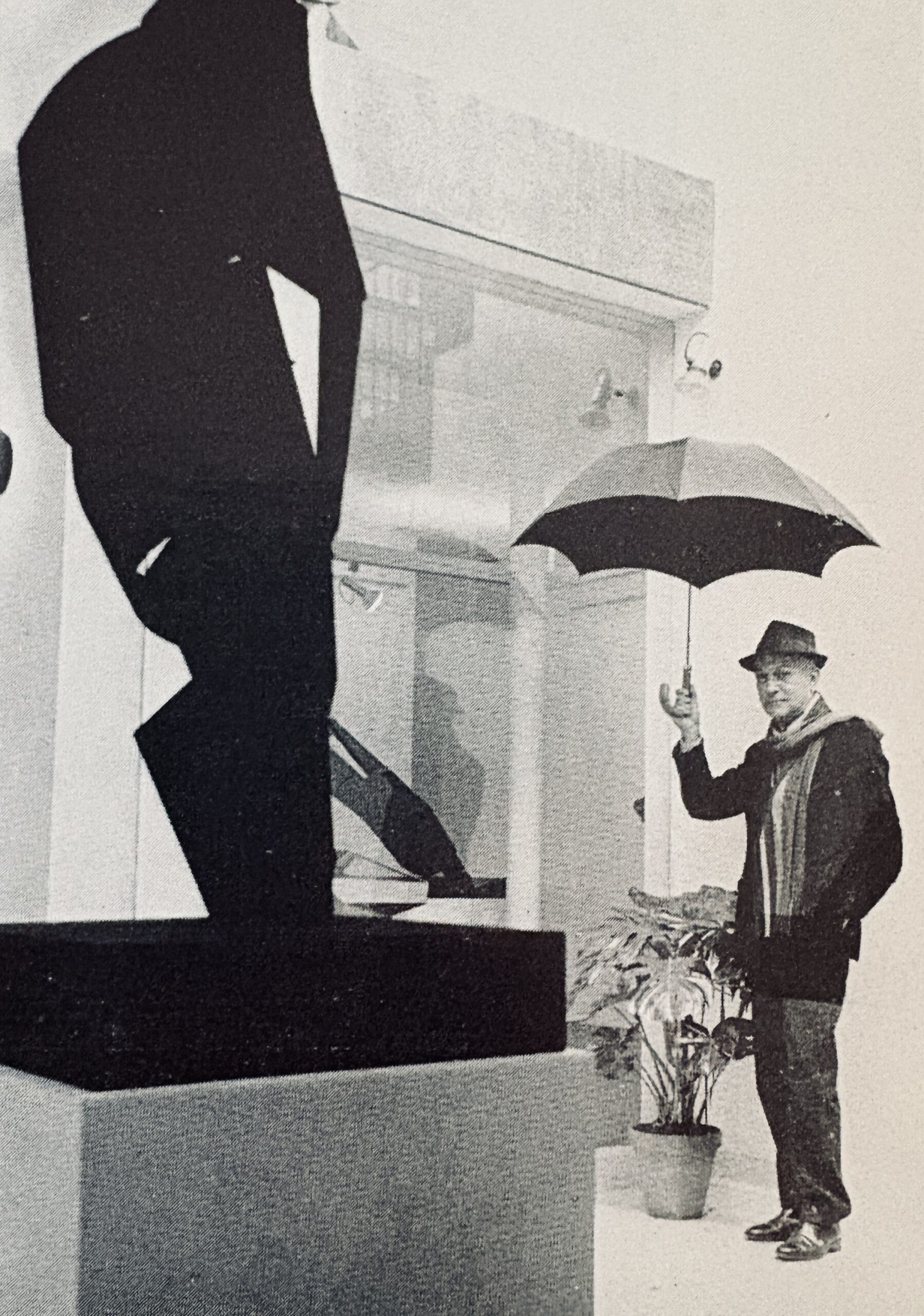
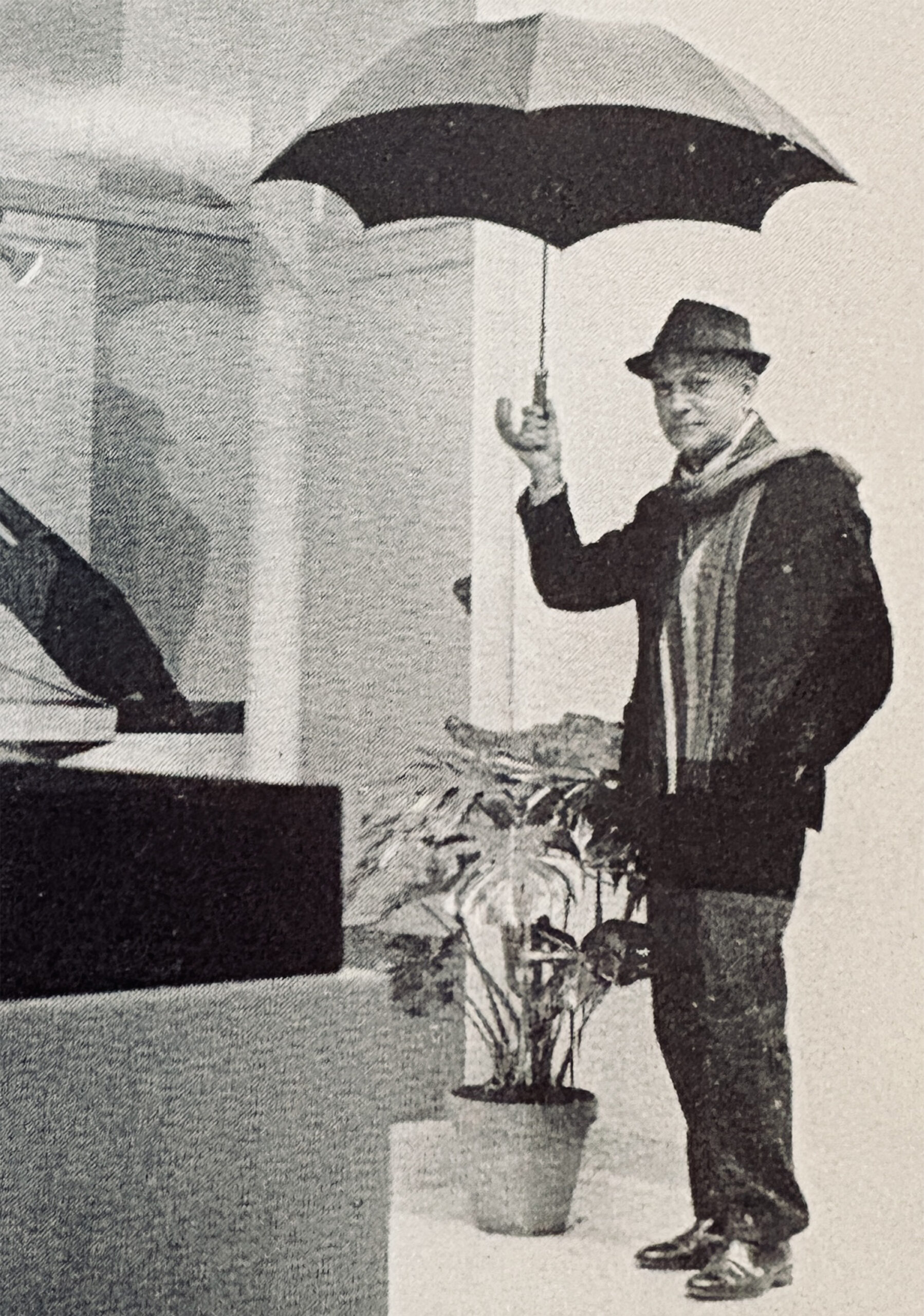
Edgar Negret photographed at Axiom Gallery during the exhibition Edgar Negret (1967), standing next to his sculpture Cape Kennedy (1966).
INDUSTRIAL MATERIALS AND TECHNICAL PRECISION
Negret’s creative evolution was deeply influenced by his residencies in major art capitals like New York and Paris, where he moved away from traditional casting methods. During his time at the Clay Club Sculpture Centre, he began experimenting with the industrial language of sheet metal,. Influenced by the planar qualities found in Alexander Calder’s work, Negret sought to enclose space using rigid materials rather than focusing on tensile strength. His technical progression led him to favor aluminum over steel, as the former provided the necessary pliability to fold and bend forms across multiple planes,. A defining hallmark of his aesthetic is the deliberate visibility of mechanical fasteners, such as nuts, bolts, and rivets, which serve as a persistent reminder of the sculpture’s industrial origins while achieving a sophisticated “spatial dynamism”.
A HISTORIC BRITISH DEBUT
The Richard Demarco Gallery in Edinburgh scored a notable “first” by showing the Colombian sculptor in February and March of 1967. In the gallery’s white rooms, his sculptures, characterized by a “purity of matt black and red,” made a deep impression on the public. This landmark Edinburgh exhibition was followed shortly after by a showing at the Axiom Gallery in London in May 1967. These exhibitions highlighted what critics consider one of the most remarkable developments in recent art history: Negret’s transition from his earlier industrial pieces to the universal language of his mature work.
RHYTMIC GEOMETRY AND KINETIC PERCEPTION
The architectural genius of Antoni Gaudí played a pivotal role in Negret’s mature style, specifically regarding the strategic repetition of forms. By utilizing a limited vocabulary of fundamental geometric shapes arranged in a precise visual sequence, Negret imposed his creative will on the observer. These static objects possess a kinetic quality; they are designed so that they appear to be in constant motion as the spectator moves around them. For Negret, the physical metal became less significant as a material and more vital as a “taking-off point” for the imagination. This rhythmic approach allowed his heavy, riveted constructions to transcend their weight, creating an optical effect of fluidity and sequence that defines his later period.
“I began by creating form, but space kept growing until it cornered form. Then form conquered space again. Space always passes through form, and forms create interior spaces. I am interested in ensuring that form is not interrupted by space, and vice versa.” — Interview with Edgar Negret published in El País (1983)
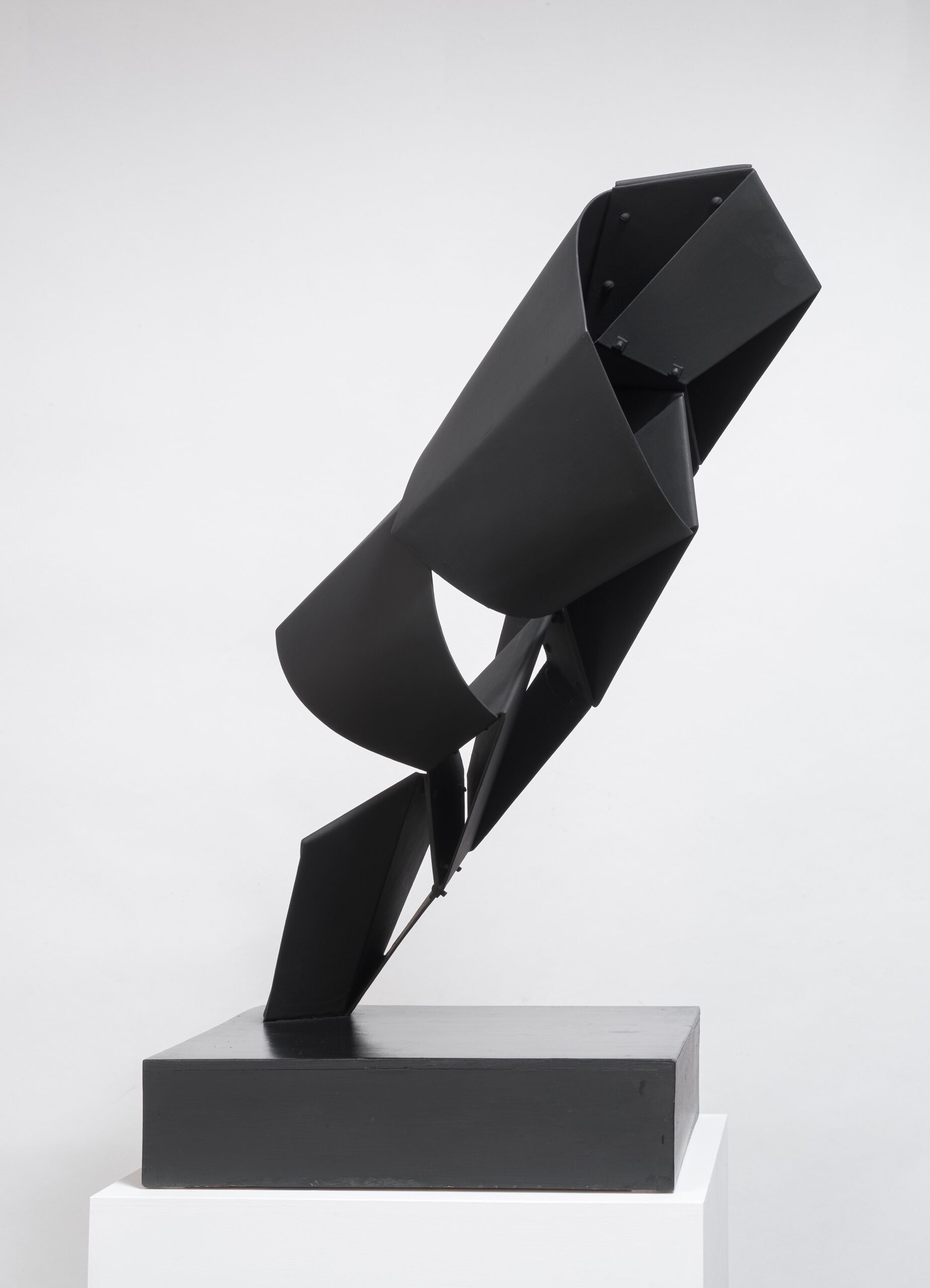
Cape Kennedy, 1966, painted aluminum on wooden base, 76 x 49 x 45 cm
“In my works, space always passes through form, and forms create interior spaces.” — Interview with Edgar Negret published in El País (1983)
CAPE KENNEDY: THE MODERN ANGEL OF THE SPACE
During the mid-1960s, Negret’s work reached a pinnacle of universal symbolism with pieces such as Cape Kennedy and Navigator. These sculptures represent a departure from his earlier, more primitive industrial experiments toward a language that addresses collective human aspirations. Cape Kennedy embodies the artist’s fascination with the technology of space travel, yet it carries a profound spiritual undertone. Negret viewed these works as “modern angels” or “unselfish instruments for escaping” the terrestrial chaos of the modern world. In this context, the rigid angles of Cape Kennedy are not just mechanical representations; they are vessels for “escapismo,” a concept Negret linked to the religious and spiritual flights of both medieval and pre-Colombian societies. Through this piece, the industrial artifact is transformed into a soaring, floating entity that seeks to transcend material boundaries.
A LEGACY OF PURITY AND HUMANISM
Negret’s international impact was solidified through major exhibitions in Edinburgh, São Paulo, and Paris, where his work left a lasting impression due to its “purity of matt black and red”. His ability to blend a rigorous, austere restraint with a certain flamboyant energy allowed his sculptures to speak a universal language. By the time he established his permanent home in Bogotá in 1963, he had successfully synthesized the cold precision of industrial artifacts with deep humanist content. Works like Cape Kennedy remain a testament to his belief that sculpture could serve as a bridge between the scientific achievements of the space age and the timeless spiritual quests of humanity. Ultimately, Negret’s career represents a relentless pursuit of integrity and depth, ensuring his place as a foundational figure in international modern sculpture.
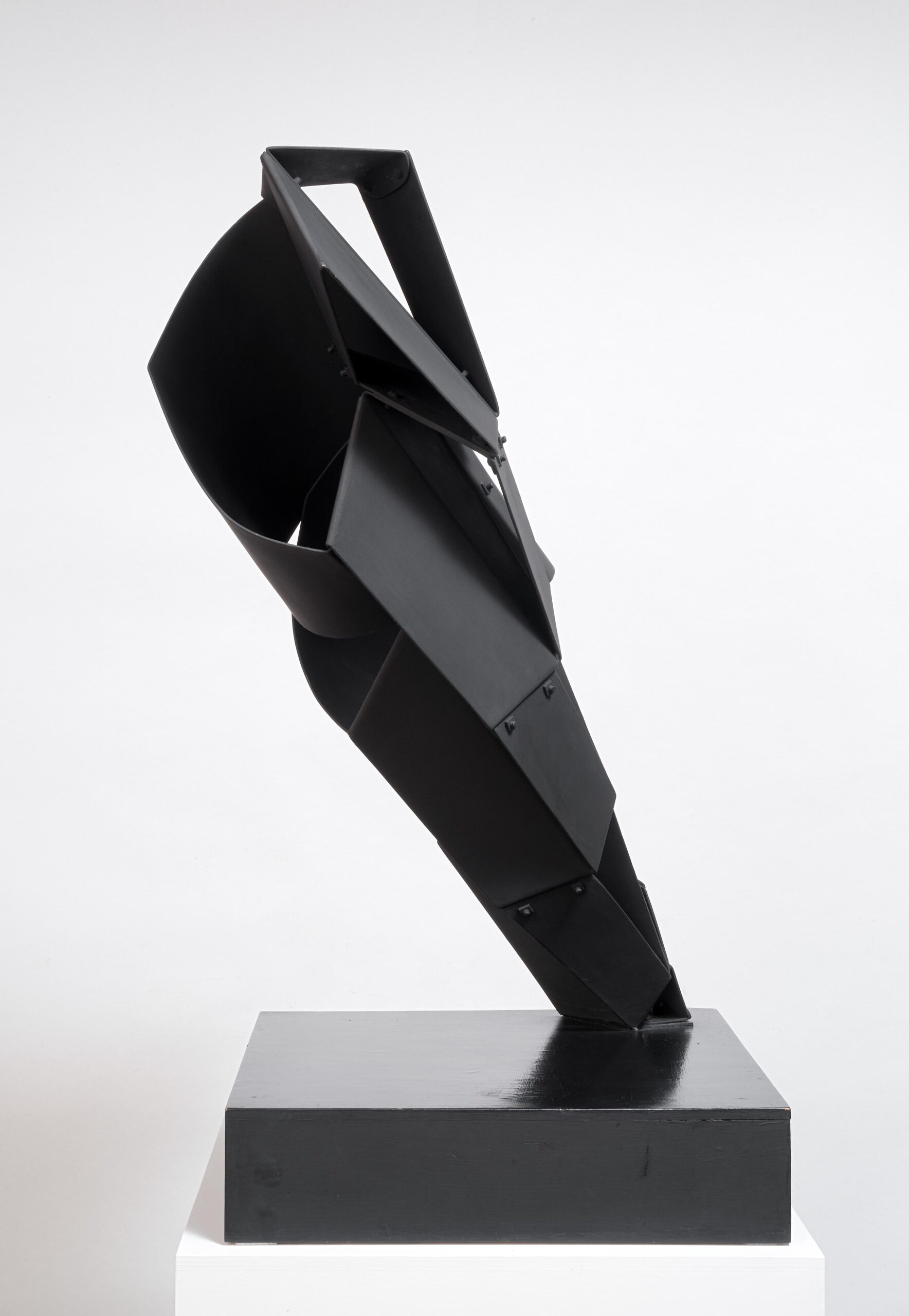
Cape Kennedy, 1966, painted aluminum on wooden base, 76 x 49 x 45 cm
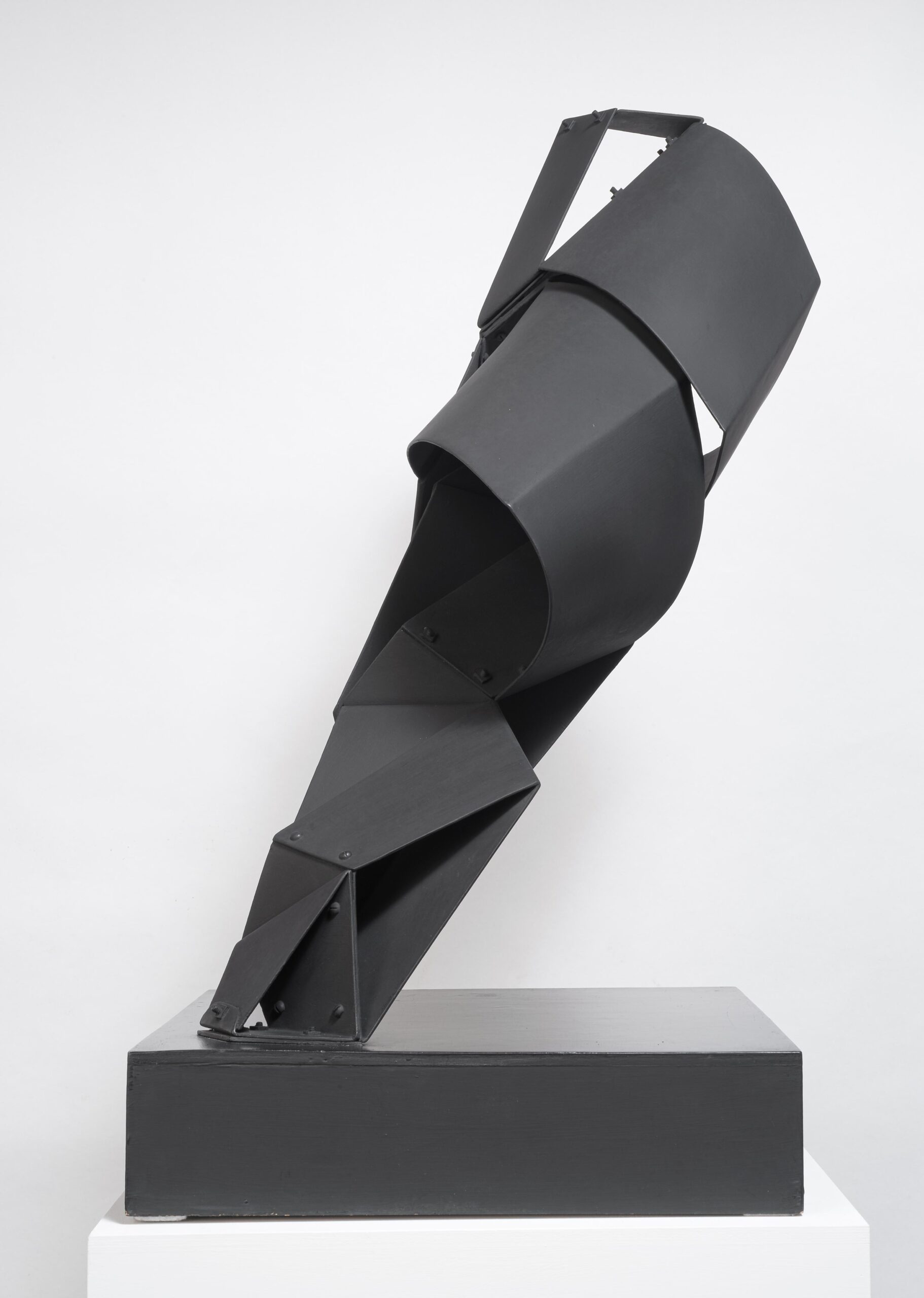
right side, Cape Kennedy, 1966, painted aluminum on wooden base, 76 x 49 x 45 cm
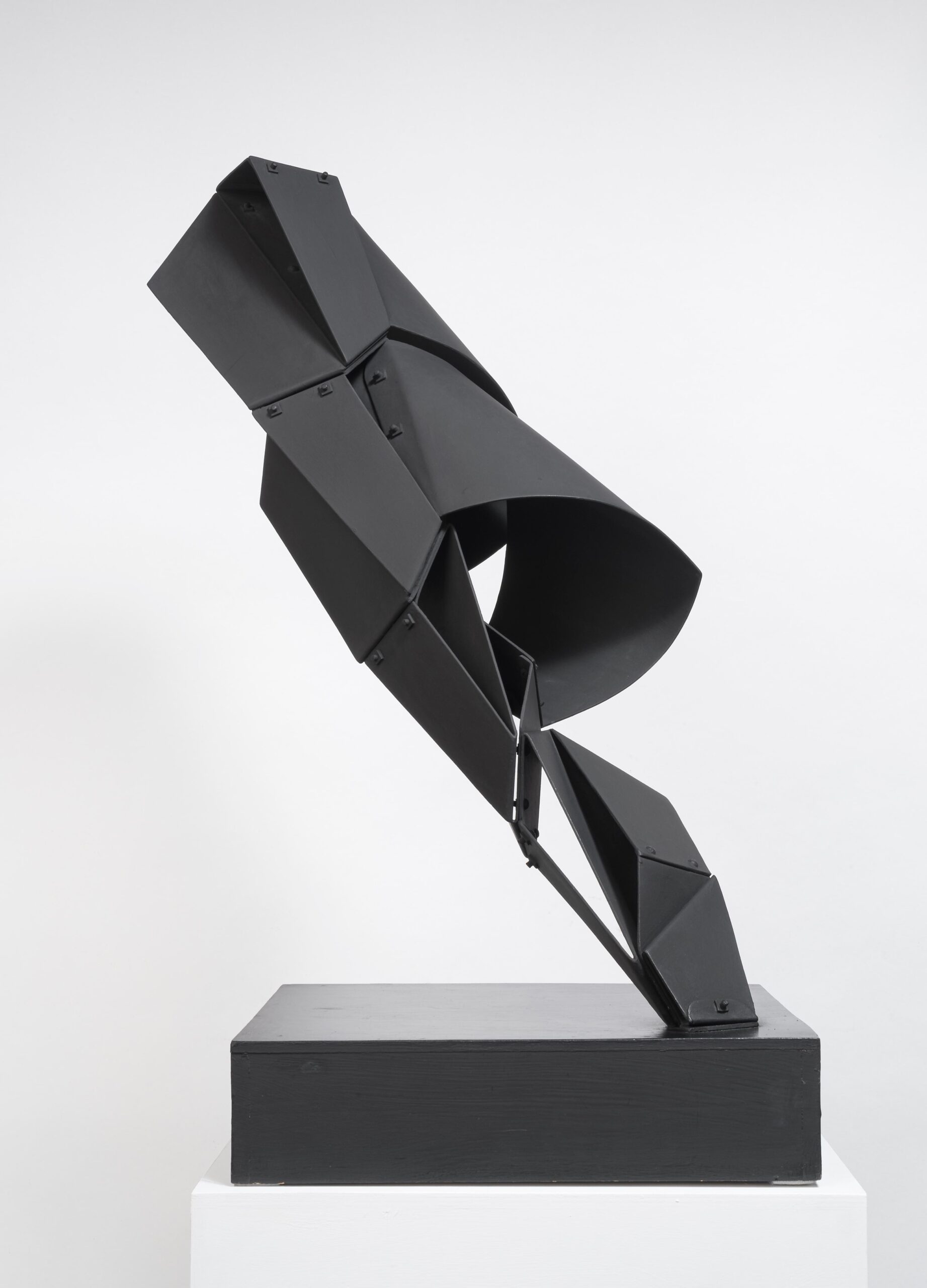
left side, Cape Kennedy, 1966, painted aluminum on wooden base, 76 x 49 x 45 cm
The information above is based on excerpts from The Sculpture of Edgar Negret by Douglas Hall, published in the catalogue of the exhibition Edgar Negret, held at the Richard Demarco Gallery in Edinburgh (February–March 1967) and at the Axiom Gallery in London (May 1967). The catalogue was subsequently reprinted in the September 1967 issue of Studio International.
