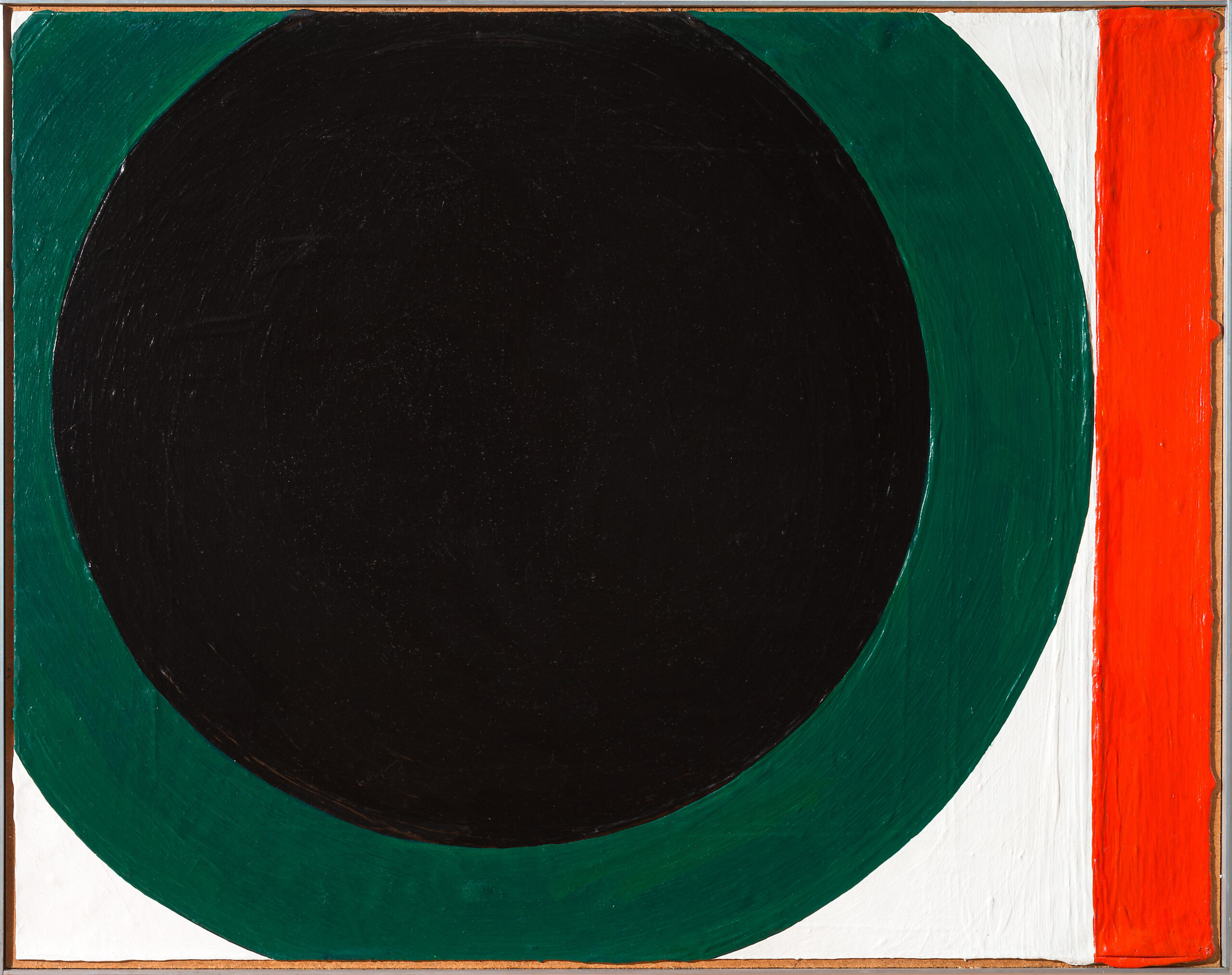
My paintings are not about anything. They are about the experience of seeing and the pleasure of color and form.
— Al Held
My paintings are not about anything. They are about the experience of seeing and the pleasure of color and form.
— Al Held
Biography
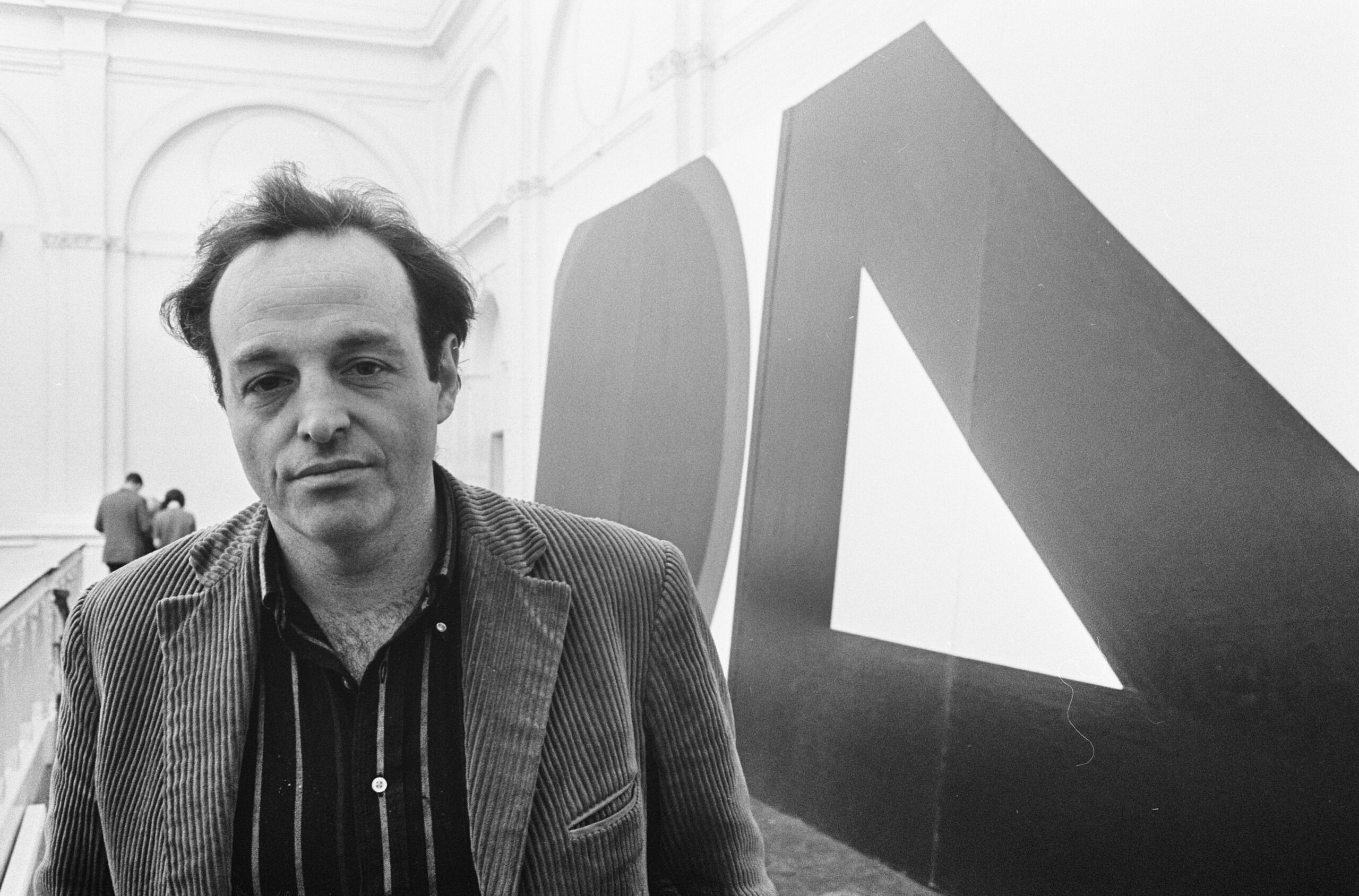
Al Held stands as one of the most ambitious American painters of the 20th century, continuously evolving his abstract style over five decades to formulate unseen truths. Born in Brooklyn in 1928, Held initially aspired to paint social realist murals, studying drawing at the Art Students League. After serving in the U.S. Navy, he used the GI Bill to continue his studies. His path drastically shifted when he traveled to Paris in 1951, where he began to identify as a second-generation Abstract Expressionist.
Upon returning to New York in 1953, Held immersed himself in the Abstract Expressionist milieu, befriending artists like Franz Kline and Mark Rothko. Throughout the 1950s, he focused on creating heavily impastoed canvases, determined to give structure to gesture. This early work culminated in his Abstract Expressionist-influenced Pigment paintings, displayed in 1958.
In 1967, Held radically altered his approach again, restricting his palette entirely to black and white. For the next twelve years, he dedicated himself to exploring space and volume through interconnected geometric forms that employed varying vanishing points.
The final expansive phase of his career began in the late 1970s when he reintroduced color. A transformative six-month residency at the American Academy in Rome in 1981 provided inspiration from the perspective, volume, and light of Renaissance art. Drawing on these classical principles, Held executed immense canvases of Baroque spatial complexity and luminosity during his last decades.
Held left behind a fifty-year legacy that included numerous solo exhibitions at major institutions such as the Whitney Museum of American Art and the San Francisco Museum of Modern Art. He also completed major public artworks across the country, including murals in Philadelphia and New York City, and stained-glass windows in Washington, D.C..
Al Held died in 2005 at his home in the Umbrian hill town of Todi, Italy.