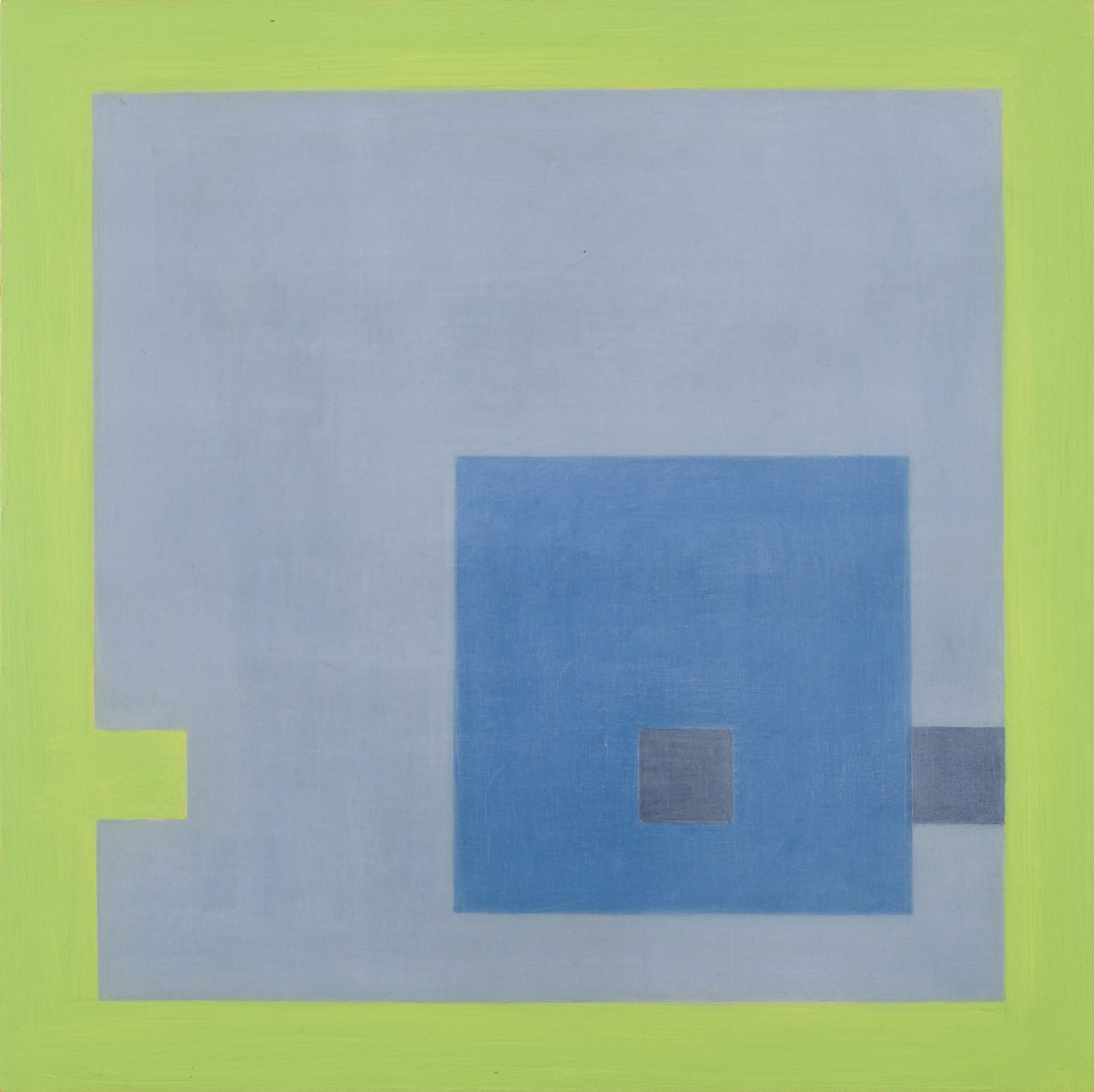
I do not paint what I see; I paint what I feel. My art is a meditation on the balance between the visible and the invisible.
— Antonio Calderara
I do not paint what I see; I paint what I feel. My art is a meditation on the balance between the visible and the invisible.
— Antonio Calderara
Biography
Antonio Calderara was born on October 28th, 1903, in Abbiategrasso, in the province of Milan.His entire existence was characterized by total absorption in painting, which served as his defense against the harshness of life.
His family moved to Milan in 1915, the same year he created his first oil painting, depicting the church of Vacciago, a village on Lake Orta. Vacciago was significant, as it was where his grandparents lived and where he held his first exhibition in 1923, featuring landscapes and portraits that demonstrated unusual maturity for a twenty-year-old. Calderara initially studied engineering at the Milan Polytechnic, attending until 1925 when, with great determination, he decided to dedicate himself solely to painting, despite his mother’s concerns about the uncertainty of such a career. His meticulous engineering aptitude influenced his early compositions, which were often city views or industrial scenes characterized by clean shapes and a disciplined study of light and shade.
Calderara deliberately sought solitude, remaining far from official art circles in Milan. During the 1930s and 1940s, his style evolved from a focus on material volume to an intense concentration on light, thinning out forms in a manner reminiscent of 15th-century masters. He maintained traditional subjects, such as landscapes of the lake, still life, and figures, though his formats became smaller.
The year 1944 was marked by the tragic loss of his daughter, Gabriella. Painting became his only remedy, and until 1957, his daughter’s image was continually evoked in paintings of his wife as a young woman. He returned to Milan in 1945, beginning a highly successful period marked by numerous exhibitions and published monographs. He first encountered the work of Piet Mondrian at the XXIV Venice Biennale in 1948, which later provided him with “an opening out towards a stricter form of meditation.”
Despite suffering heart attacks in 1950 and 1970, his artistic journey intensified. By the mid-1950s, he embraced a compelling affinity with Mondrian’s rigor. This led to a gradual re-thinking of his work, where he eliminated the third perspective dimension and sought a language that focused purely on the projection of light. By the 1960s, he transitioned fully to an abstract expression favoring monochromes and aniconisms. Light, which he viewed as a “wholly new fifth dimension,” became the primary internal source in his works, reflected in titles such as Spazi-luce (Space-lights).
His new abstract works achieved rapid international recognition, particularly in Germanic countries, where he participated in exhibitions of geometric Abstract art alongside historic exponents like Max Bill. In Italy, he co-founded the “Gruppo Punto” in Milan in 1961, dedicated to understanding “the condition of the finite in the infinite.” His works were included in major international events throughout the decade, including documenta 4 in Kassel (1968), and he received critical acclaim from figures such as Umberto Eco and Giulio Carlo Argan. Later in his career, he explored experimental arenas, collaborating with electronic music composers and developing visual poetry series known as Epigrammi.
Antonio Calderara died in Vacciago on June 27th, 1978, just months before the official inauguration of the Foundation he had long desired to create to house the collection of works gifted by his international artist friends.
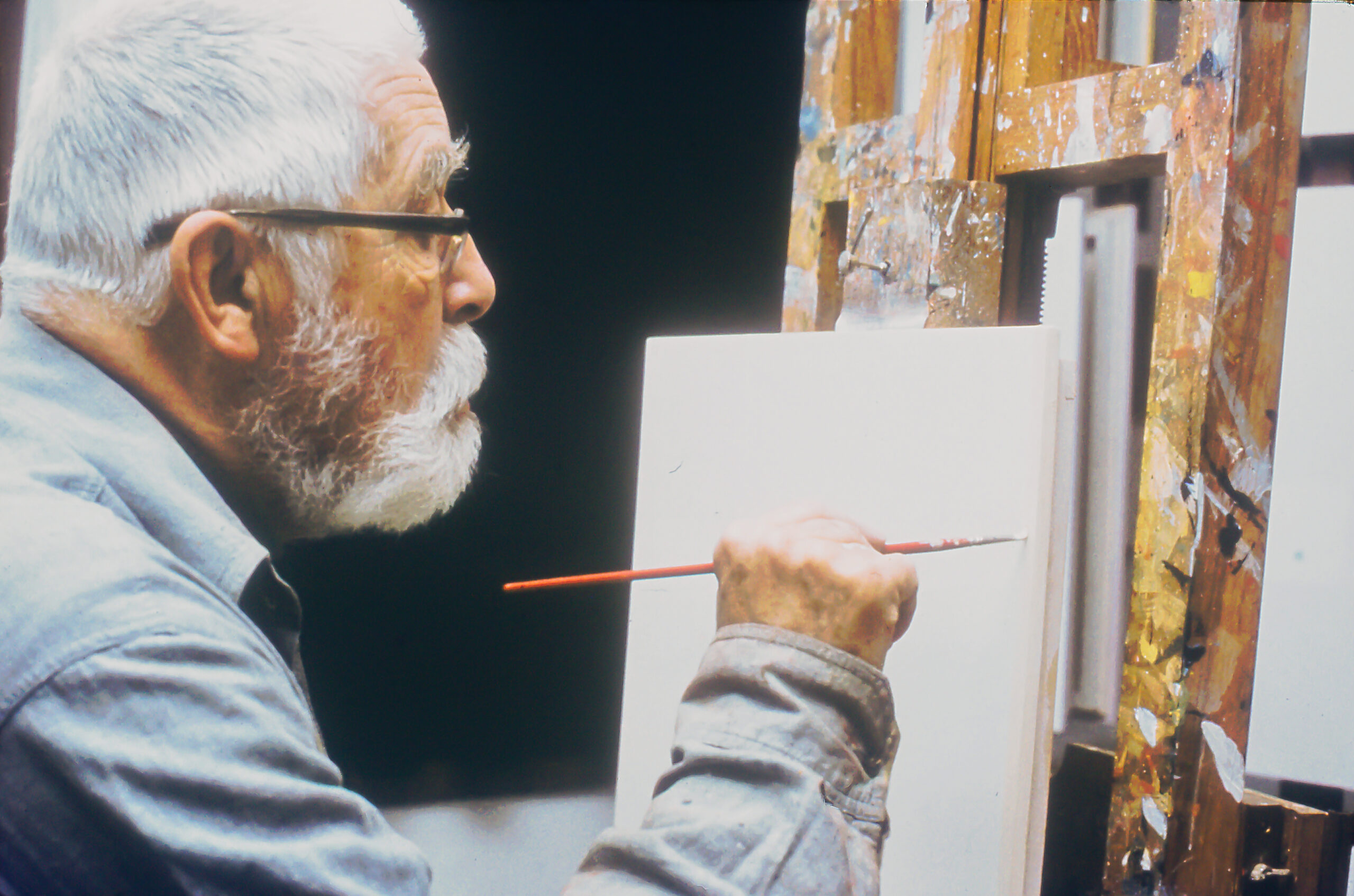
Antonio Calderara in his studio © Fondazione Carmela e Antonio Calderara