I like the idea of art being a form of communication—something that gets sent out and might never come back.
— Ray Johnson
I like the idea of art being a form of communication—something that gets sent out and might never come back.
— Ray Johnson
Biography
Ray Johnson remains one of the most paradoxical figures in modern art, frequently described as the “most famous unknown artist”. Born in Detroit, his artistic foundation was built at the progressive Black Mountain College, where he studied under Bauhaus masters like Josef Albers and collaborated with avant-garde icons such as John Cage and Merce Cunningham.
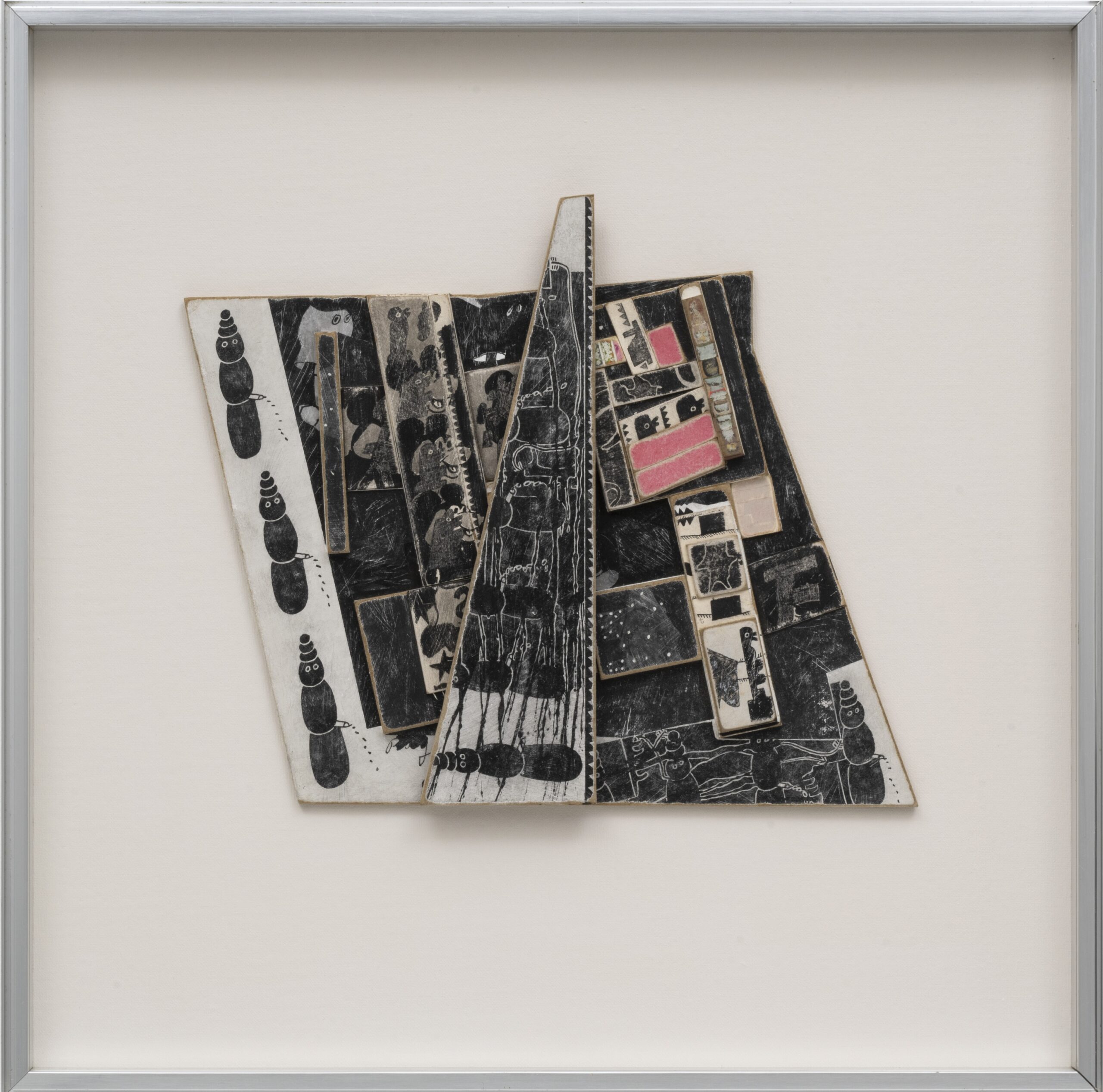
Upon moving to New York in 1949, Johnson initially explored geometric abstraction but famously destroyed much of this early work to focus on a more radical medium: collage. By the mid-1950s, he was producing “moticos”—small, irregular collages featuring images of celebrities like Elvis Presley and James Dean. These works preceded the formal Pop Art movement, yet Johnson’s attitude toward celebrity was the polar opposite of figures like Andy Warhol; while Warhol sought the spotlight, Johnson purposefully dodged fame.
The year 1968 marked a turning point in his life. Following a series of national tragedies and personal threats—including the shooting of his friend Andy Warhol—Johnson retreated from the Manhattan art scene to Locust Valley, Long Island. Living as a self-described “mysterious and secret organization,” he became a hermit-like legend, continuing to create complex “tiles” and cardboard compositions while refusing to sell his work or participate in the commercial art world.
His life concluded with a final, highly choreographed exit. On Friday, January 13, 1995, Johnson drowned in a manner that seemed to be his final conceptual performance, leaving behind a trail of symbolic clues linked to the number 13. After his death, his home was discovered to be a meticulously organized archive of thousands of works, confirming his legacy as a pioneer of conceptualism whose influence continues to grow.
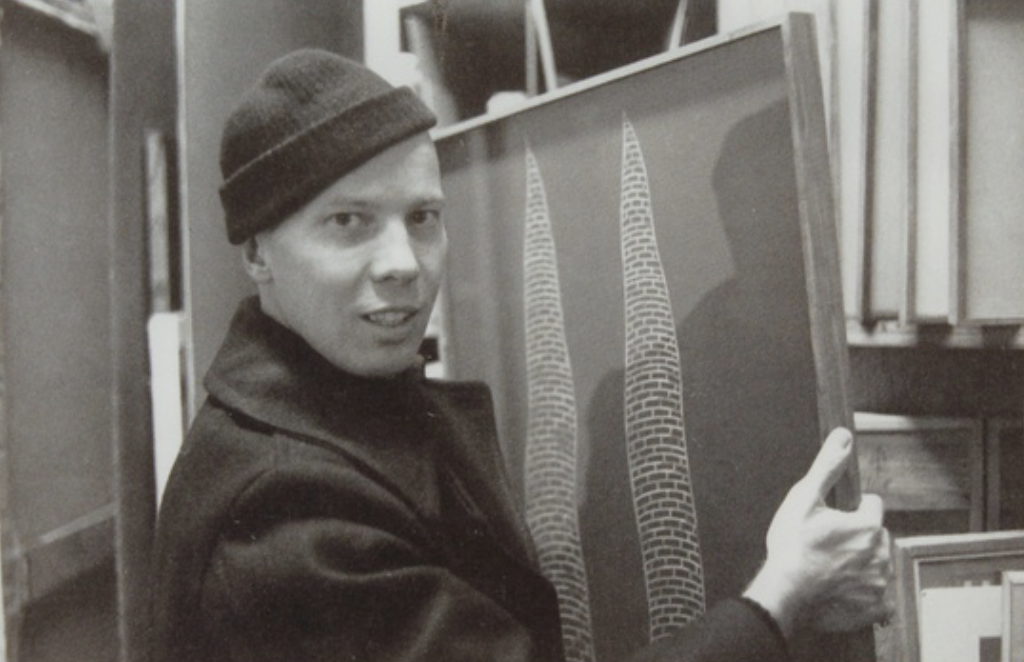
Ray Johnson, 1968 ca.