Color is a kind of ecstasy. It’s an emotional experience that transcends the material world.
— Robert Natkin
Color is a kind of ecstasy. It’s an emotional experience that transcends the material world.
— Robert Natkin
Biography
Born in Chicago in 1930, Robert Natkin grew up in an extended Russian-Jewish immigrant family. As a child, he regularly attended movies. He studied at the Art School of the Art Institute of Chicago from 1948 to 1952, where he was strongly influenced by the collection of Post-Impressionist paintings. During this time, he encountered Abstract Expressionism and studied decorative arts at the Field Museum of Natural History.
In 1952, Natkin lived briefly in New York, where he was deeply influenced by Willem de Kooning’s paintings. Returning to Chicago (1953–1957), he resumed psychotherapeutic treatment while working and teaching painting. He associated closely with a distinct group of local artists, including Judith Dolnick, whom he married in 1957. To showcase their work, Natkin and his colleagues opened the Wells Street Gallery that same year. Following the gallery’s closing, Natkin moved to New York in 1959, beginning his exhibition career with the Pointdexter Gallery.
The Field Mouse paintings began in 1967. Natkin received major recognition, including a retrospective solo exhibition at the San Francisco Museum of Art in 1969. In 1970, the Natkin family left New York for West Redding, Connecticut, as the Field Mouse series evolved toward much bolder colors and forms.
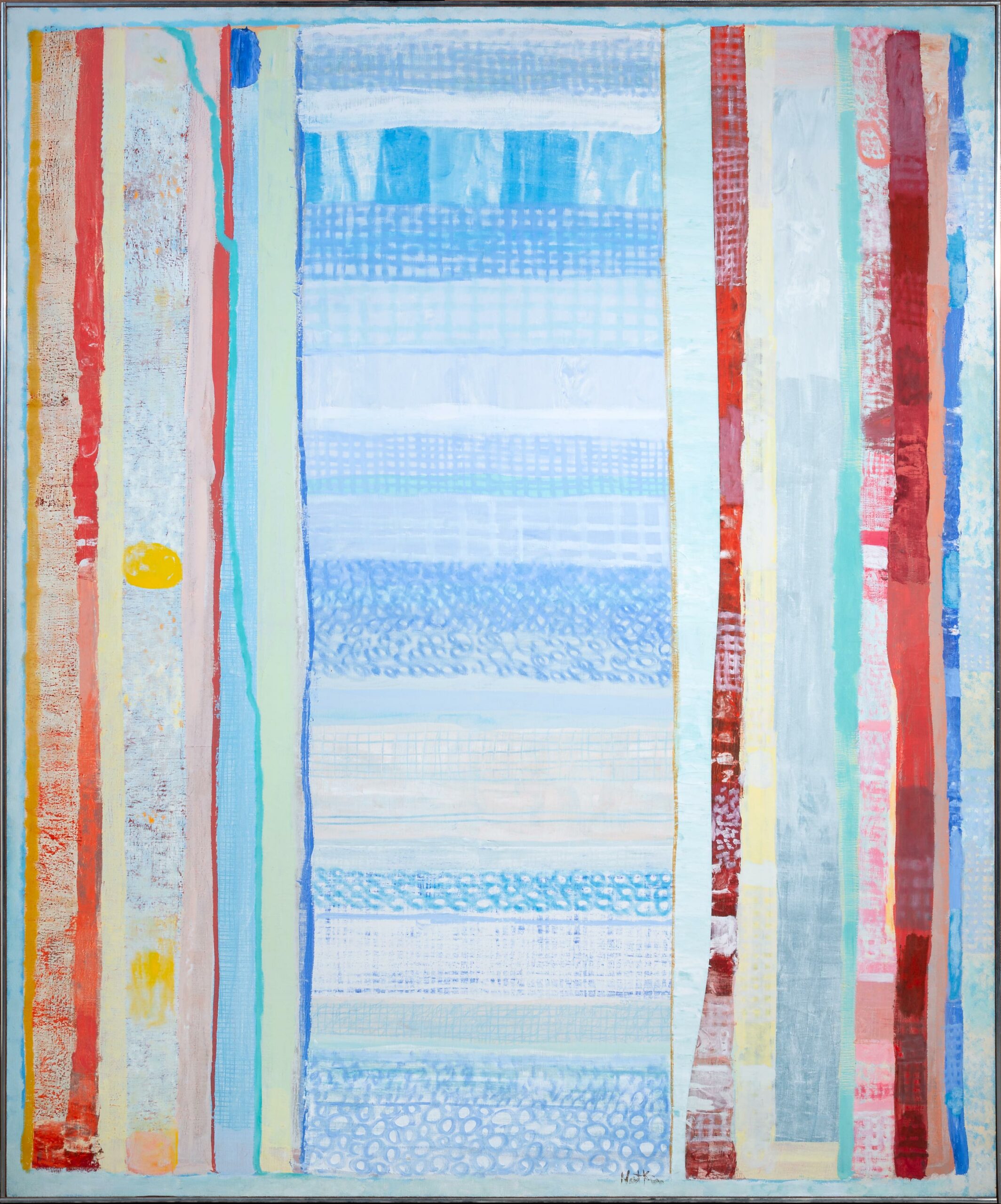
A significant technical discovery occurred in 1971 when he developed a method of painting using textured cloths wrapped around sponges. This technique led to the start of the Intimate Lighting series, a body of work influenced by a Cubist exhibition. After visiting England in 1974, he initiated the Bath series, which was characterized by a muting of colors.
The mid-1970s saw a strong revival of earlier concepts: the Face series began in 1975, and the Apollo paintings were “spectacularly revived”. That year, he also executed a commission for a giant mural in Chicago. Around 1977, influenced by a visit to the Klee Foundation, Natkin began the Bern paintings, many executed on paper, endeavoring to “recapture the expressionism of [his] youth”. His career received documentary recognition from the BBC in 1980, the same year he began writing regularly, contributing art criticism to publications like Modern Painters. Later accomplishments included executing major murals at Rockefeller Center (1991) and the Millennium Hotel (1992).