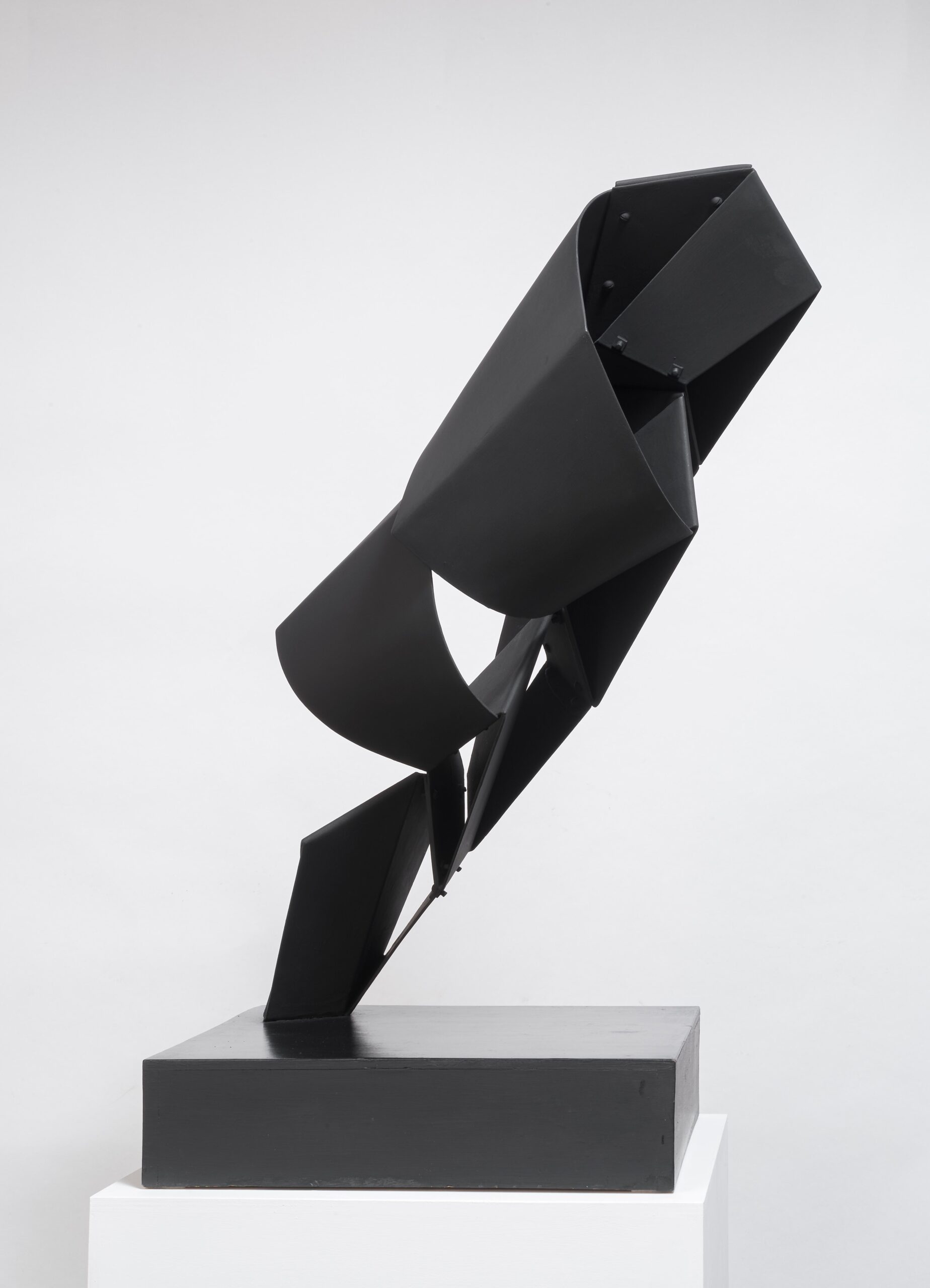
In my works, space always passes through form, and forms create interior spaces.
— Edgar Negret
In my works, space always passes through form, and forms create interior spaces.
— Edgar Negret
Biography
Born in Popayán in 1920, Edgar Negret emerged as a pivotal figure in modern sculpture after beginning his formal training at the School of Fine Arts in Cali. A transformative encounter with the Spanish sculptor Jorge de Oteiza in 1948 significantly shaped his early artistic direction, setting the stage for a career defined by international exploration. During the 1950s, Negret lived in major art hubs such as New York, Paris, and Barcelona, where he collaborated and connected with influential artists like Louise Nevelson and Ellsworth Kelly.
Negret’s work is celebrated for its unique dialogue with post-war technology. His industrial aesthetic is perhaps best captured in his “Magic Apparatuses” series, which gained international acclaim in the late 1950s. Despite their “mechanical coldness” and precise, blade-like edges, these sculptures function as “magic vessels” that invite the viewer to find poetry and mystery within the functional forms of modern life.
By investigating the link between ancient artifacts and contemporary machinery, Negret sought a timeless quality that challenges our perceptions of mass production and daily homogenization. His significant contributions to the art world were formally recognized in 1968, when he was awarded the David E. Bright international prize for sculpture at the Venice Biennial.
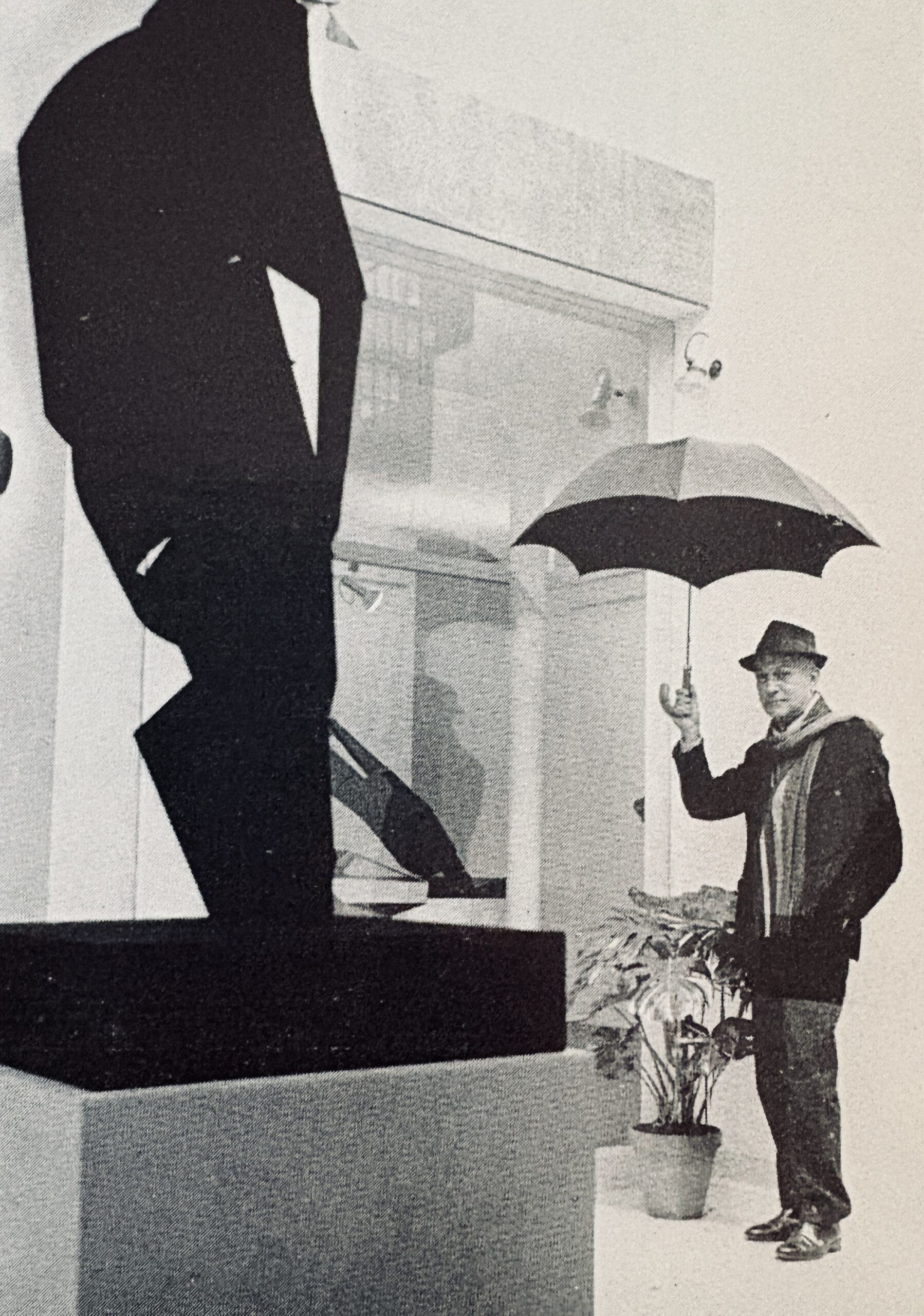
Edgar Negret photographed at Axiom Gallery during the exhibition Edgar Negret (1967)